
Daycares and childcare centers
Daycare cleaning that happens after the last child leaves
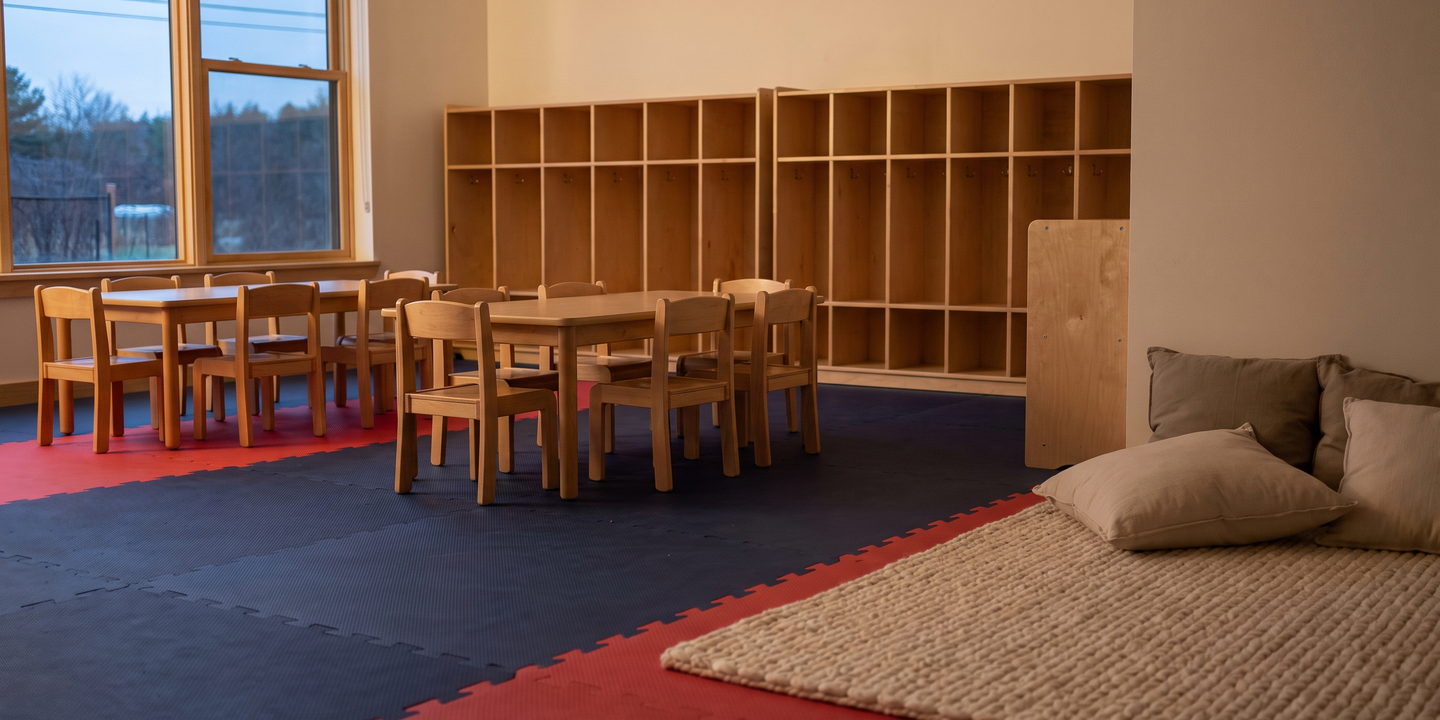
DC Commercial Cleaning works in a childcare centre only outside operating hours, after the last pickup or before the first drop-off. The scope covers classroom floors, the low surfaces children actually touch, nap and food areas, and follows the products and access rules the centre itself approves.
Access rule
In the building only when the children are not
This is the rule that shapes everything else. A childcare centre does not want an unfamiliar adult in a room while children are in it, and no scheduling convenience is worth arguing with that. Work begins once the last child has gone home and ends before the first arrival, with a named key-holder.
Centres commonly run 6:30am to 6:30pm, which leaves a narrow evening window. A visit that overruns collides with staff closing up, or with a parent arriving early the next morning, so planning the route to finish on time matters as much as the cleaning itself. That is worth raising when you arrange a first discussion.
Child height
Everything that matters is at child height
A standard commercial checklist is written for adults, so in a childcare room it misses the surfaces that get used.
- Door handles at sixty centimetres.
Children reach a different band of every door, gate and cabinet than adults do, and that band is where contact concentrates. - Walls and skirting, not just floors.
Hands land on walls at pushchair height all day. Adult routines almost never touch them, so marks build up in a stripe. - Low tables, chairs and cubby interiors.
Table undersides, chair backs and the inside of a cubby collect more than the surfaces someone standing up would notice. - Floors as a working surface.
Where children sit, crawl and play on the floor, it is not a walking surface being tidied. It carries the same weight as a table.
Separation
Food areas and diapering areas stay separated
Both exist in the same room in many centres, sometimes a few paces apart, and the separation has to be physical rather than assumed: dedicated cloths, mop heads and equipment for each, plus an agreed sequence so a visit never works from a changing station toward a table where food is served.
The discipline only holds if it is written down, because the person who knows the rule is not always the person who turns up. A centre wanting that set out alongside a recurring routine is usually looking at janitorial services, while one sharing a building with offices may want the broader commercial cleaning frame. Restrooms with lower fixtures and heavier use than their footprint suggests can be scoped through restroom cleaning.
Product approval
Products the centre approves, not the ones we prefer
In most buildings the contractor chooses the chemistry. In a childcare centre the centre chooses it, and that is the right way round. Children mouth surfaces, and a product nobody on your staff has approved has no business being left on a table where that happens.
If something on the approved list runs out, the answer is to tell you, not to substitute. DC Commercial Cleaning does not claim childcare licensing, sanitation compliance or any child-safety credential. Your licence is inspected against your centre; our part is following the product and access rules it puts on the rooms. Centres in Silver Spring and College Park raise this before anything else.
Room realities
Art residue, nap mats and soft flooring
Glue, paint, glitter and dried modelling compound are a daily output, not an occasional accident, ending up in floor seams, on chair legs and pressed into soft matting. Nap mats and cots need the centre’s own instruction on what may be wiped and what goes into a laundry cycle your staff run.
Soft flooring and play matting hold what hard floors release, so they need lifting and working under, not a pass over the top. An entryway opening onto a playground brings in grit, sand and wet leaves on twenty pairs of small boots, so the first two metres take a disproportionate share of the work.
Windows and cost
Evening windows, closure days and key-holders
An evening slot handles the routine: floors, low surfaces, restrooms, food and changing areas, waste. What it cannot absorb is work that needs hours rather than minutes, which is where a closure day earns its place. Professional development days and holiday closures are the natural moments for a reset on matting, cubby interiors, skirting and floor seams, arranged through one-time deep cleaning.
Cost follows room count, frequency and the length of the window, not the age of the children. A centre sits in the same band as any similar-sized facility on the industries list.
Recurring office-cleaning guide range per sq ft. Many factors apply and each price is customised for the location. Visit the pricing guide for the published guide ranges and their context.
A centre operating inside a church building will recognise the shared-use scheduling described on the churches page, and the access-boundary discipline has a close parallel, set for clinical reasons rather than child-safety ones, on the medical facilities page.
What to send first
Operating hours, room count, the approved product list and who holds the keys. That is enough to plan a window.
Start the scope discussionAnswers for centre directors
Daycare cleaning FAQs
The questions centres ask before a key changes hands.
Do cleaners work while children are present?
No. Work happens after the last pickup or before the first drop-off, never during operating hours. A named key-holder arranges entry, and the visit is planned to finish inside that window rather than run into it.
Who chooses the cleaning products used in classrooms?
The centre does. Give us the approved list and the rooms each product may be used in, and that list is what gets used. If something on it runs out, we tell you rather than substituting a product nobody approved.
How are food areas and diapering areas kept separate?
By keeping cloths, mop heads and equipment separate per area and agreeing the order rooms are worked in, so nothing travels from a changing station toward a table where food is served. The centre sets the rule; the routine follows it.
Do you claim childcare licensing compliance?
No. DC Commercial Cleaning does not claim childcare licensing, sanitation compliance or any child-safety credential. A licensing visit assesses your centre, not your cleaning contractor. Tell us which of its requirements land on the rooms, the products and the hours, and the routine is built to hold them.
Can a centre book a deeper clean on a closure day?
Yes. A closure day gives the hours an evening window cannot, which suits floors, mats, cubby interiors and skirting. Ask about one-time deep cleaning, or call (571) 506-2402 with the date you have in mind.
Next step
Start with the window and the product list.
Send your operating hours, the number of rooms, the products your centre approves and the key-holder arrangement. That is enough to plan an evening routine that finishes on time.
Request a quote