
Retail businesses
Retail cleaning judged at the moment the doors open
A shop is assessed in the first few seconds of a visit, so DC Commercial Cleaning plans retail cleaning around that moment: entrance matting, sales-floor presentation, glass, fitting rooms and the stockroom behind them, timed against your trading hours and the delivery pattern that shares the same corridor.
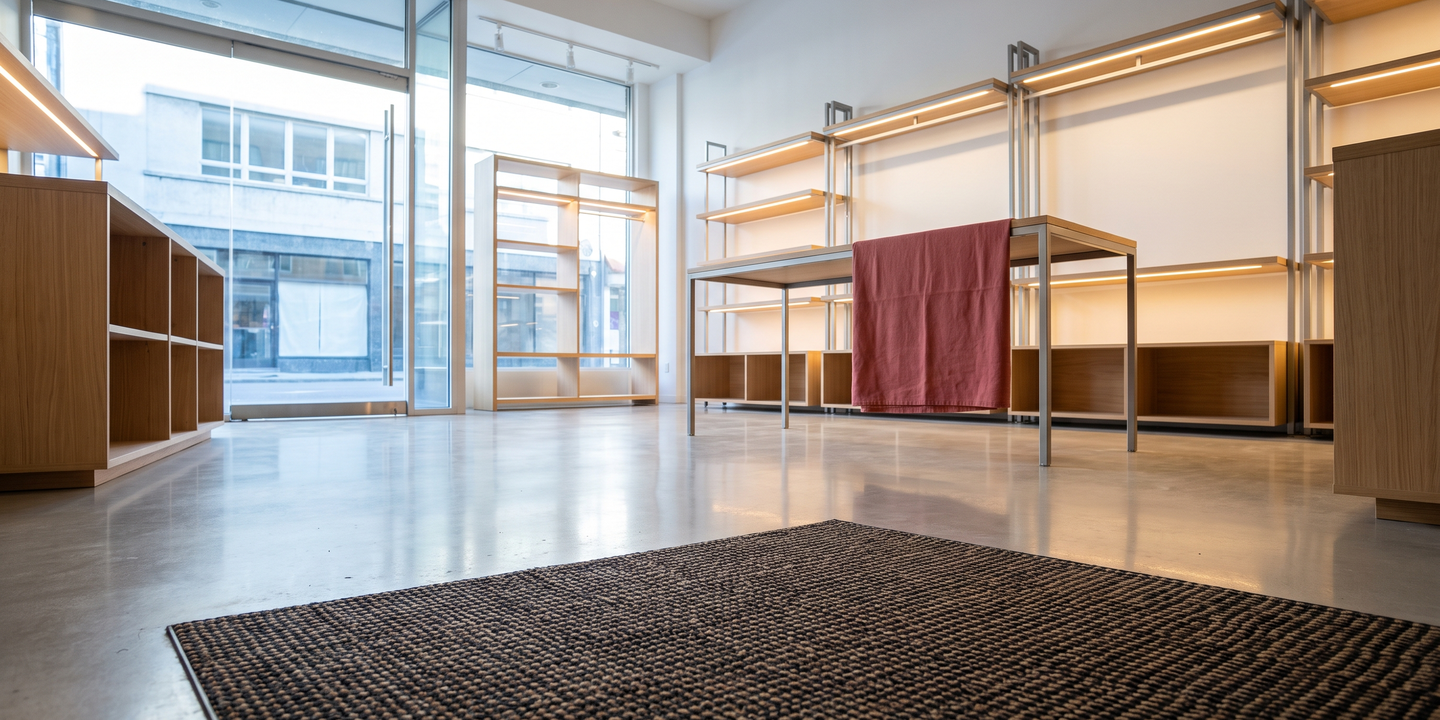
The first few seconds
The doorway is the first judgement
Nobody walks into a shop and inspects it. They form an impression in the doorway and carry it to the till, built out of three things: what the floor looks like underfoot, whether the glass they just pushed is smeared, and how tidy the first fixture in their eyeline is. Everything else is read through that first judgement.
Which is why a retail scope is written outward from the entrance rather than as a list of rooms. The first three metres of floor, the door glass at hand height and the fixtures closest to the door earn attention disproportionate to their square footage, because they set the standard a customer applies to the rest of the visit. Commercial cleaning is the broad route in, and the industries index covers neighbouring sectors.
Where the dirt actually enters
Entrance floors, matting and wet-weather days
Almost everything that ends up on a sales floor walks in through the door. Matting is the control, and most stores have less of it than they need: the working length is several strides, enough for both feet to land on it more than once, and a mat shorter than that simply moves the problem a metre further in. On a wet DC day the entrance can undo an overnight clean before the first hour of trading is out.
The honest answer to wet weather is not a heavier clean at five in the morning. It is a plan that accepts the floor will need attention again during trading, and says who does it and when: a mid-day pass, staff pulling and shaking the matting, and a clear expectation about slip risk while the floor is damp.
Lighting is unforgiving
Glass and fixtures under retail lighting
Retail lighting is designed to make products look their best, which means it is bright, angled and aimed at exactly the surfaces a customer studies. That same light finds every smear on the shopfront and every dust line along a shelf edge. Glass cleaned in flat morning light can look flawless and then show streaks the moment the display lighting comes up, so it is worth checking under the lighting it will actually be seen in.
Fixture tops and shelf edges have the same problem: dust settles on the horizontal edges at eye level and reads as neglect under a spotlight, even when the floor is spotless. Where glass deserves its own conversation, the window cleaning page sets out that scope separately.
The rooms that decide a sale
Fitting rooms, till points and the stockroom behind them
A fitting room is the most private part of a store and the most quietly decisive. A customer alone with a mirror, a bench and a floor they are standing on in socks makes a judgement they never mention to anyone. Fitting rooms get treated as low-priority because they are small and out of the main sightline, which is exactly backwards.
The stockroom argument is similar but commercial rather than emotional. It gets skipped as "not customer-facing" until a delivery cannot be unpacked, and then it costs trading time. Back corridors and the stockroom floor belong in the scope explicitly; janitorial services is the usual route for organising that recurring work.
Name the rooms that get skipped
Fitting rooms, the till point, the back corridor and the stockroom floor: put them in the scope in writing.
Discuss a retail scopeA window that moves with the season
Trading hours, delivery windows and the seasonal squeeze
Fixed trading hours make the cleaning window predictable, which is the one scheduling advantage retail has. The complication is that the window moves with the calendar. Extended December hours and sale periods stretch trading at both ends and compress cleaning exactly when footfall and the presentation standard are highest. A store that runs an overnight visit for ten months may need a daily pre-opening pass for two.
Deliveries compete for the same time and the same back corridor, so it is worth saying when they land. A crew and a pallet meeting in a narrow corridor is a scheduling problem, solved in the plan rather than on the morning. A concentrated reset before a peak season or after a refit is a separate one-time deep cleaning discussion.
Retail scope is quoted on square footage, frequency, the number of fitting rooms and restrooms, floor type and access, not on the sector label. DC Commercial Cleaning does not offer loss prevention, stock handling, merchandising or security, and does not claim retail certifications or presentation standards; describe what your lease or centre requires so it can be considered in the discussion.
Recurring office-cleaning guide range per sq ft. Many factors apply and each price is customised for the location. Visit the pricing guide for the published guide ranges and their context.
Stores in Washington, DC and College Park, MD are both within the service markets. Two sectors nearby meet the same customer-facing pressure in a different form: restaurant cleaning and salon cleaning. For a plan, nightly cleaning covers the after-hours window and contact is the direct route.
Answers for store and area managers
Retail cleaning FAQs
These cover timing, wet weather, the back-of-house rooms and the seasonal peak.
Should a store be cleaned before opening or after closing?
Both are used, and the deciding factor is which condition matters more to you. An overnight visit gives a longer, quieter window; a short pre-opening pass gives the doorway and floors a fresher state at the moment trading starts. Many stores combine a longer overnight visit with a brief morning check.
How do you keep entrance floors presentable in wet weather?
Through matting length and a mid-day pass rather than a heavier clean at 5am. Tell us the matting you have and whether staff can pull and shake it, and a wet-season variation can be written into the plan instead of improvised in February.
Are stockrooms and back corridors included?
Only if the scope names them, and it is worth naming them. A stockroom that stops being walkable slows every delivery and eventually reaches the sales floor. Janitorial services is a useful route for organising that recurring back-of-house work.
Can cleaning frequency increase during the holiday trading season?
Yes, and it is better agreed in advance than in December. Extended trading and higher footfall compress the window at the same time as they raise the standard, so a seasonal variation can be set out with the base plan.
Next step
Tell us your trading hours and your delivery window.
With the trading pattern, the matting you have and the rooms behind the sales floor, a retail scope can be drafted around the moment your doors open.
Request a quote