Defined facility reset
One-time deep cleaning for commercial spaces
One-time deep cleaning is a project-focused option for a commercial location that needs concentrated attention beyond its normal routine. The discussion defines priority rooms, surfaces, floor types, timing and access before a tailored scope is agreed, so the facility has a practical handoff rather than an open-ended expectation.
When one-time deep cleaning fits
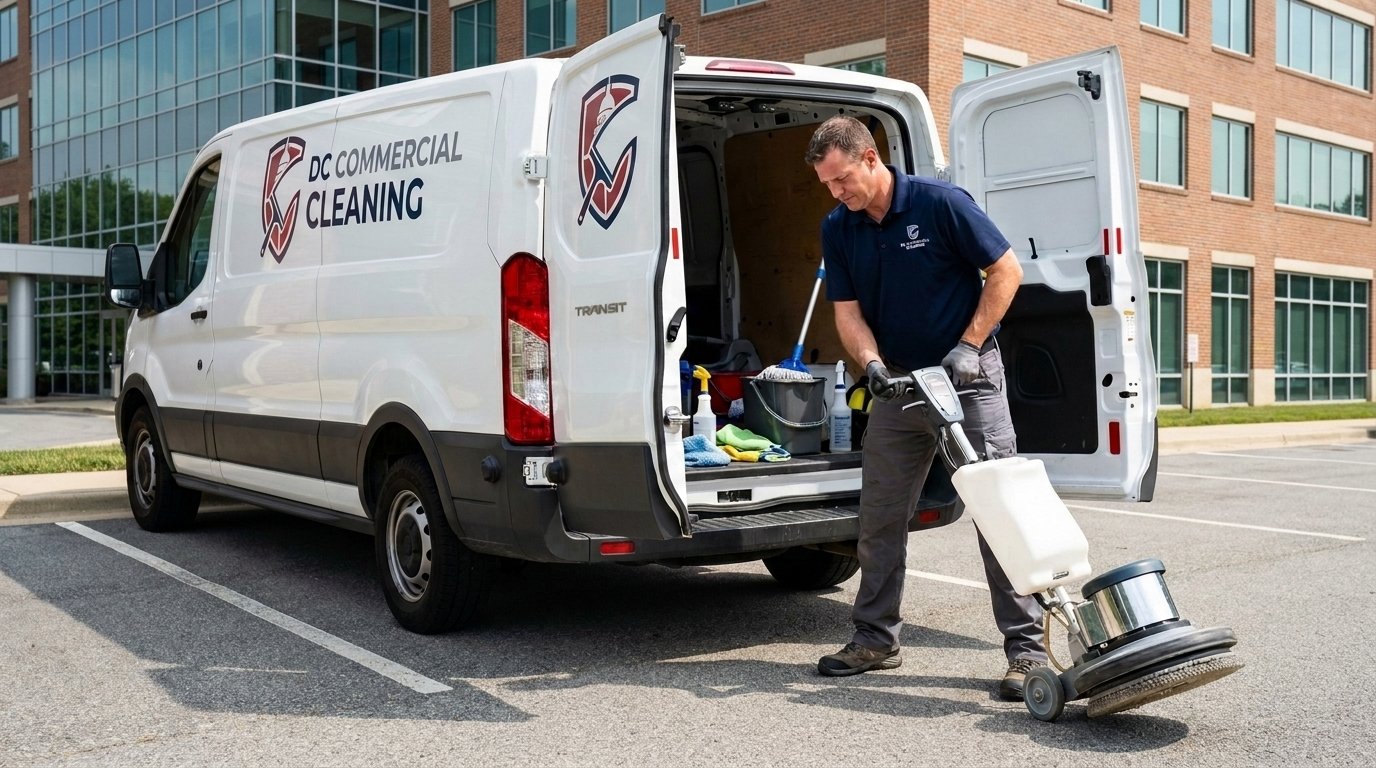
Some cleaning needs do not belong inside a standard recurring visit. A space may be preparing for a change in use, recovering from a particularly busy period, reopening areas that have had limited attention, or simply needing a more concentrated reset before a regular schedule is considered. One-time deep cleaning from DC Commercial Cleaning is a project-focused conversation for those situations.
The point is to define the result before work begins. “Deep cleaning” can mean different things to different facilities, and a broad label does not tell a manager what will actually be addressed. A useful request identifies the areas that need attention, the condition of the space, the desired timing, and any access limits. That creates a practical basis for a tailored scope rather than an open-ended expectation.
Request a tailored quote or call (571) 506-2402 to discuss the location and the reset you need.
A one-time deep-cleaning discussion is useful when a commercial location needs work beyond its normal routine or does not yet have a recurring plan. An office may be reorganizing its shared spaces. A retail business may want to reset customer-facing areas before a new operating period. A facility manager may want to address selected rooms and floors before deciding whether janitorial services or commercial cleaning is appropriate.
It can also be a sensible starting point when the priority is concentrated attention rather than a repeating schedule. The project should have a clear purpose: identify the rooms, surfaces, and areas that matter most; agree on the work window; and establish what the facility needs to look ready for afterward. That is different from asking a recurring team to absorb an undefined extra project into a standard visit.
One-time deep cleaning is not a substitute for a written, ongoing service plan when the location has daily or weekly needs. Once the reset is complete, a manager can decide whether a scheduled office cleaning or nightly arrangement makes sense. The next step depends on how the facility is used, not on a pre-set package.
Set priorities before the visit
The most useful deep-cleaning scope separates included work from work that needs separate review. Start with the facility map: entrances, reception, offices, conference rooms, break areas, restrooms, corridors, storage spaces, customer areas, and any rooms that are off limits. Then identify the requested level of attention for each area and the floor types involved.
The scope can distinguish between surface cleaning, floor care, restroom attention, waste handling, and other agreed tasks. It should also state whether a task is limited to a named room or applies across the location. If glass is part of the request, connect it to the separate window cleaning discussion instead of assuming it is included. If restroom conditions are the main concern, the restroom cleaning page offers a more focused starting point.
Clear boundaries protect both sides of the project. A deep-cleaning request does not automatically include every task a visitor might associate with the phrase. The quote conversation should identify any access constraints, restricted rooms, specialized requirements, or items that need separate approval. It should also record what remains outside the agreed scope, so a manager knows when to request additional work rather than expecting an unplanned task at the end of the visit.
Floor and access considerations
A one-time project has two handoffs: the handoff into the facility and the handoff back to the person responsible for it. Before the visit, the facility should provide approved entry instructions, the available cleaning window, building or suite rules, rooms that require coordination, and a contact for operational questions. If the site is occupied during the work, state which spaces must remain available and when.
The project also benefits from an order of work. Customer-facing areas, high-use shared rooms, restrooms, or floors may need to be addressed first, depending on the facility’s next use. That order should follow the building’s schedule rather than a generic sequence. Access details matter just as much: elevators, loading areas, keys, codes, security procedures, and restricted zones all affect a realistic plan.
At completion, the responsible contact should have a shared understanding of what the project covered and what happens next. If a recurring plan is under consideration, use the completed project to identify the rooms that need attention every visit, those that need a rotating cadence, and work that should remain separate. This turns a one-time reset into useful information for a future cleaning plan without implying that ongoing service has already been selected.
How one-time scope is quoted
A customized quote starts with the actual project, not a flat “deep clean” price. Square footage, restroom count, floor type, after-hours access, and industry requirements are confirmed factors that shape a cleaning discussion. The facility’s layout, the requested areas, the condition described during the inquiry, the amount of time available, and whether the work is one-time or leads into a recurring plan also help define the scope.
Give DC Commercial Cleaning the approximate size of the location, the facility type, the rooms that need attention, the preferred date or window, and the access process. Include any priorities that cannot be missed before the space is used again. A detailed request makes it easier to separate routine care from project work and to identify questions that need answers before a quote is prepared.
For recurring-cost context, see cleaning price guidance. Published recurring ranges are decision aids, not a quote for a one-time project. The right scope is set by the location and the work agreed for that visit.
Follow-on cleaning options
A one-time reset often leads to a more specific next question. Use commercial cleaning for a broader, multi-area facility plan, office cleaning for desk-based workplaces, and nightly cleaning when the work window after business hours is central to the decision. The industries page can help visitors locate their facility type without suggesting a special credential or unverified result.
For service-area navigation, visit Washington, DC, Arlington, VA, Alexandria, VA, Bethesda, MD, Silver Spring, MD, or College Park, MD. Availability and the right scope are discussed for the specific location.
Answers for facility managers
Deep cleaning FAQs
What is a one-time deep cleaning quote based on?
A one-time deep-cleaning quote is based on the agreed scope plus square footage, frequency where a recurring plan is considered, restroom count, floor type, after-hours access and industry requirements.
Can one-time cleaning lead to a recurring plan?
Recurring needs can be discussed after a project is complete, with no commitment implied. The completed scope can help identify rooms that need each visit, rotating work and tasks that remain separate.
Are all cleaning tasks included in a deep clean?
No. The task list must be agreed for the location. Separate discussions may be needed for glass, specialized requirements, restricted rooms, or work outside the defined scope.
Can a one-time project happen after business hours?
After-hours access can be considered as part of the quote discussion. The available window, entry process, building rules and occupied areas must be clear before the work is planned.
What happens after the deep-cleaning visit?
The facility can decide whether it needs another project or a recurring plan. Visit contact or call (571) 506-2402 to begin with the location details and intended outcome.