Commercial cleaning
Commercial cleaning services for managed workplaces
Commercial cleaning gives facility managers a practical way to set recurring or project-based work around agreed areas, tasks and access conditions, from shared spaces and restrooms to floor care and support rooms, with a schedule discussed for the people who manage the site.
Scope before assumptions
What commercial cleaning can cover
Commercial cleaning is not one fixed checklist. A retail floor, warehouse office, medical waiting area and multi-tenant lobby have different traffic patterns, finishes, access rules and priorities. DC Commercial Cleaning begins with how the facility is used, then builds a service conversation around the spaces the responsible manager needs to address.
The route suits organisations that need routine care across customer-facing areas, shared spaces, work areas and support rooms. It is also useful when a building needs a more defined plan before opening, after a busy period or when an existing scope no longer matches the space. The practical aim is an orderly environment without treating every facility as though it has the same requirements.
For desk-based layouts, explore office cleaning. For recurring facility support organised around a wider routine, see janitorial support. A focused reset may be better suited to one-time deep cleaning.
A clear routine
Build a routine around the facility
A workable scope separates everyday tasks, rotating work and separately quoted needs so a manager can compare proposals by what is actually included.
Start with the facility
Discuss approximate square footage, layout, floor types, restroom count, customer-facing areas, staff zones and any rooms with limited access. A public-facing site needs different planning from one that can be cleaned after closing.
Set the service rhythm
Frequency is a practical decision. Some locations need attention several times a week, whilst others need a regular routine for key areas and lower-traffic work. The rhythm follows use, rather than a generic package.
Clarify access and handoff
Identify entry arrangements, available areas, equipment staging and the person who receives operational questions. Clear access details keep the work orderly and minimise avoidable disruption.
Define the scope in plain language
Name rooms, surfaces, floors and recurring tasks. Note work that is not included or needs a separate quote, especially where floor finishes or public areas need different attention.
Shared spaces and floors
Floor care and shared spaces
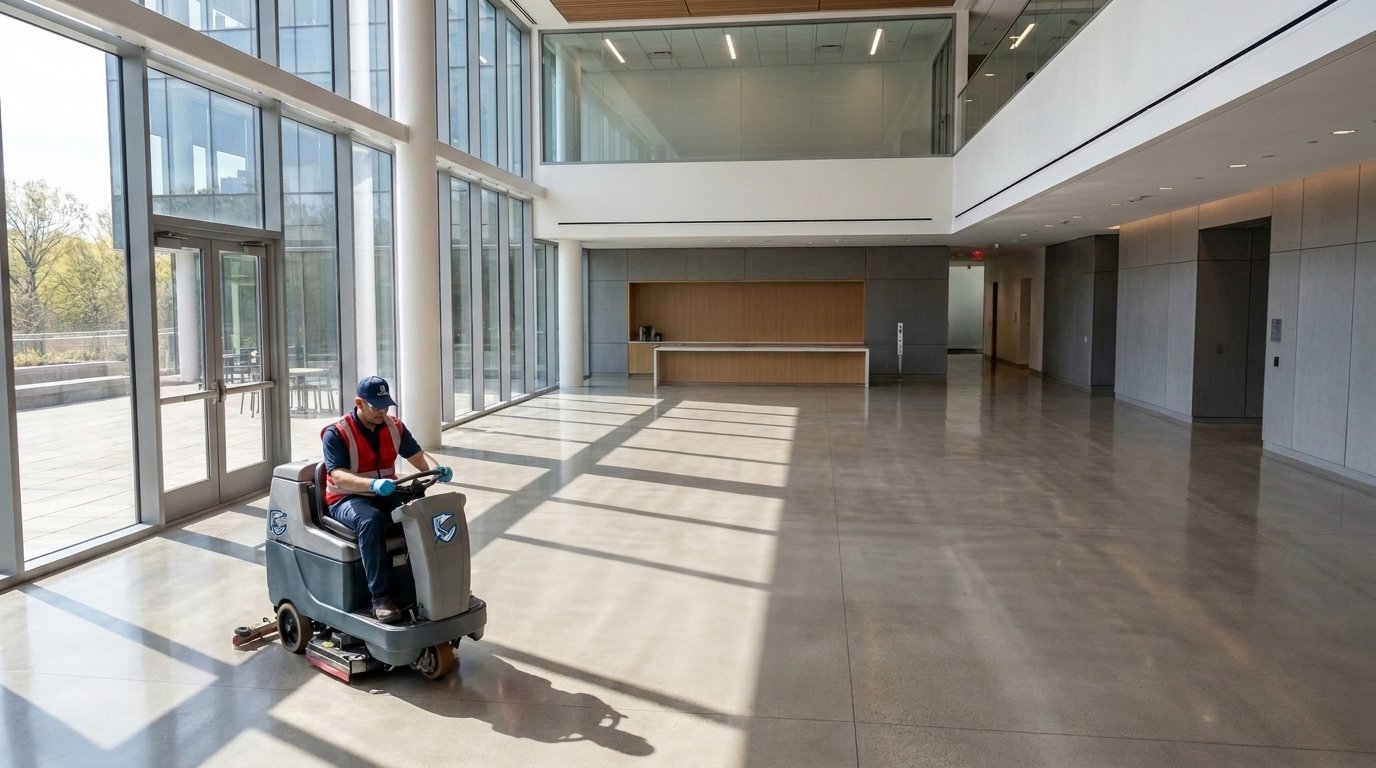
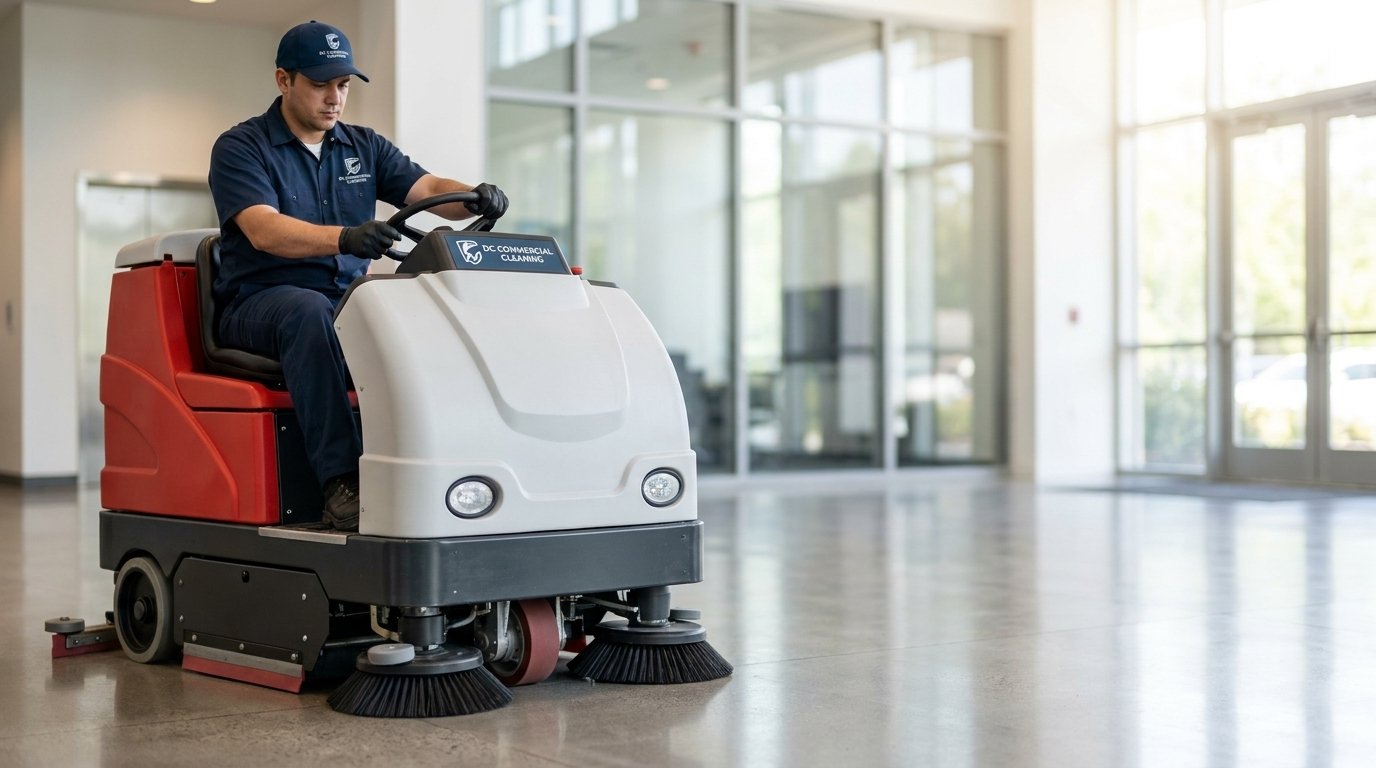
A commercial cleaning scope can bring together the tasks that make a facility easier to use and manage: entry areas, lobbies, corridors, shared workspaces, break areas, restrooms and other agreed surfaces. Vacuuming, sweeping, mopping and related floor care need to suit the surface and the level of traffic.
Retail operators may need a plan that accounts for entrances, fitting areas, restrooms and back rooms. A warehouse or dealership may need office areas, customer zones and hard-working floors considered together. Churches and daycares may need the schedule discussed around programmes and shared spaces. The facility types page gives each setting a factual route into that discussion.
Medical facilities, financial businesses, restaurants and salons have their own operational requirements. The quote conversation should bring forward access rules, industry requirements, desired frequency and priority areas. DC Commercial Cleaning does not claim a single compliance solution for every setting.
Pricing discussion
How commercial cleaning is priced
Commercial cleaning is priced through an agreed scope, not a universal menu. The facility details give the quote conversation its useful context.
Square footage is important, but it is only one part of the picture. Frequency, restroom count, floor type, after-hours access and industry requirements can all affect the work involved. The number of rooms, condition of frequently used areas and whether the site is occupied during cleaning may also shape the proposed plan.
Share the facility type, approximate size, desired schedule, areas needing regular attention and access requirements. For confirmed planning ranges and the six factors behind them, use the pricing guide. Published figures remain guide ranges rather than fixed quotes.
Service area
Service areas and next steps
Washington, DC is among the stated markets. Review the area route or continue to a tailored cleaning discussion.
Frequently asked questions
Commercial cleaning FAQs
What is included in commercial cleaning?
The scope is set around the facility’s agreed areas and tasks, rather than assumed from a generic package. It can distinguish recurring work, rotating tasks and separately quoted needs.
How are commercial cleaning prices set?
Square footage, frequency, restroom count, floor type, after-hours access and industry requirements are discussed before a quote. Many factors apply and each price is customised for the location.
Can commercial cleaning be scheduled after business hours?
After-hours access can be discussed during quotation. See nightly cleaning when the work window is the main consideration.
A joined-up facility view
Keep the scope easy to review
Commercial cleaning works best when the scope is written so the building contact can see what is routine, what rotates and what needs a separate discussion. List the areas included, the surfaces that need particular attention, the planned frequency and the conditions for access. This also gives the facility a useful way to flag changes, such as altered occupancy, a new shared room or a different work window. The aim is not to promise identical work in every location, but to make the agreed plan understandable before service is scheduled.