
Janitorial services
Janitorial services for routine facility care
DC Commercial Cleaning provides janitorial services for routine facility care, planned around shared areas, restrooms, floors, access and frequency. The service scope is agreed with the location, separating recurring tasks from periodic work so managers can coordinate cleaning with staff schedules, building rules and day-to-day operations.
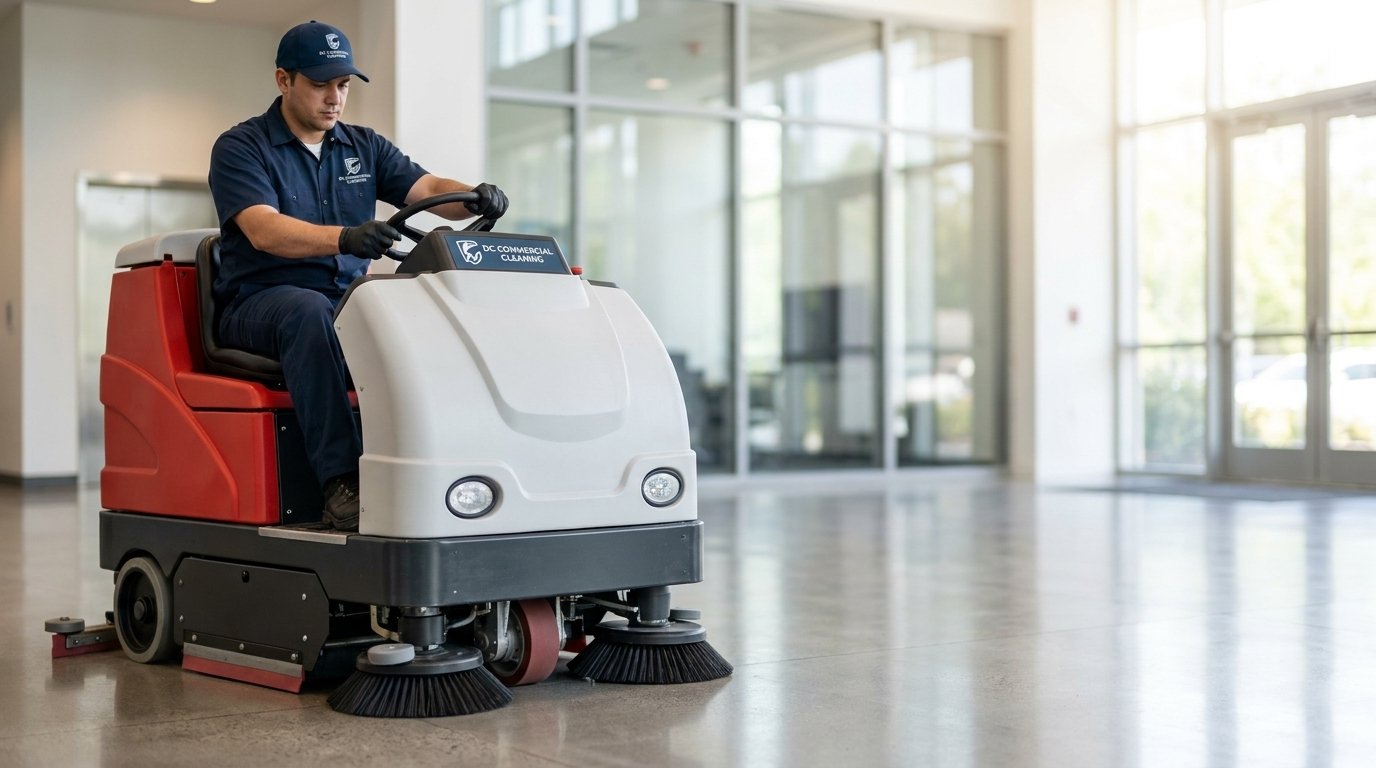
Steady facility care
What janitorial services support
Janitorial service fits when cleaning is a regular facility need rather than a response to one event. Waste needs attention in designated areas, restrooms need a routine, common surfaces need care and floors need work that suits their material and traffic. DC Commercial Cleaning discusses those recurring needs around the facility’s operations, rather than asking managers to choose a generic checklist.
An office, retail space, gym, warehouse or shared commercial building can have different priorities. A clear scope defines the spaces, frequency, access window and tasks that matter at that location. That clarity helps facility managers, office administrators and business owners coordinate cleaning with staff schedules, tenant activity, deliveries, building policies and other on-site work.
Routine care for shared facility areas
A tailored janitorial plan can combine recurring work for entrances, reception areas, hallways and common workspaces; restrooms and agreed replenishment needs; break rooms and kitchenettes; waste and recycling removal from designated locations; vacuuming, mopping and routine floor care; interior glass and agreed shared or high-touch surfaces; and conference rooms or training rooms.
Each item needs a practical definition. Floor care can mean vacuuming carpeted areas, damp mopping hard surfaces or arranging a separate cadence for more detailed work. Restroom cleaning can include fixtures, partitions, floors, waste receptacles and agreed consumables, but the written scope should state exactly what is included. For a focused route, see restroom cleaning.
The same applies to waste, break rooms and common areas. A facility with central collection points has different needs from one with several suites or floors. A busy reception area may need attention before the workday begins, while another location may prioritise employee areas and back-of-house rooms. A walkthrough and task list turn those details into a usable plan.
Align cleaning with access and frequency
Useful janitorial service accounts for the activity around it. Before recurring work begins, the facility and DC Commercial Cleaning can define approved entry points, rooms that require coordination, areas handled first, waste locations, floor materials and times when cleaning cannot interrupt operations. Clear instructions allow the work to stay within agreed boundaries.
- Start with operating facts.
Discuss facility size, layout, use, floor types, restroom count, traffic patterns, desired frequency and after-hours access. - Separate recurring and periodic work.
Identify tasks for every visit and work that belongs on a different cadence. - Set access details.
Clarify approved entry points, elevators, loading areas and restricted rooms. - Review when the facility changes.
New occupancy, seasonal traffic or altered schedules can prompt a useful scope review.
If the preferred work window is after business activity ends, nightly service explains how access and closing procedures can be discussed. A concentrated reset rather than recurring care may suit one-time deep cleaning.
Quote factors for janitorial work
A janitorial quote is shaped by square footage, frequency, restroom count, floor type, after-hours access and industry requirements. The arrangement of rooms, number of shared spaces, traffic level and entry process can also affect the service plan. The pricing factors page explains the guide ranges and why they are not a fixed package.
Many factors apply and each price is customised for the location. Sharing the facility type, approximate size, desired schedule, priority areas and access requirements early gives the conversation a more useful starting point.
Connected services
Janitorial service can be the base of an ongoing plan, with related work discussed where it fits. Office cleaning focuses on professional workspaces, while commercial cleaning covers broader business environments. The facility types page sets out the listed commercial settings without claiming special credentials or outcomes.
Washington, DC, Arlington, Alexandria, Bethesda, Silver Spring and College Park are the listed service markets. These routes help visitors find the relevant area page; availability for a specific request is confirmed during the quote discussion.
Planning questions
Janitorial services FAQs
Recurring care is clearer when scope, timing and responsibilities are discussed in plain language.
Is janitorial service the same as commercial cleaning?
Janitorial service is presented here as a routine facility-care option within the broader commercial cleaning offering. The scope is set around the location’s agreed areas, tasks and frequency.
What information is needed for a quote?
Share square footage, frequency, restroom count, floor type, after-hours access and industry requirements. Many factors apply and each price is customised for the location.
Can janitorial work be scheduled after business hours?
Yes, where the facility and access arrangement allow it. Entry instructions, building policies, restricted rooms and closing procedures should be agreed before service begins.
How do I request a janitorial quote?
Use contact or call (571) 506-2402 to discuss the facility, desired frequency and cleaning scope.
Next step
Build the routine around the facility.
Start with the rooms, access conditions and operating rhythm that matter to your location.
Request a quoteRoutine with clear boundaries
Document recurring and periodic tasks
A janitorial routine is easier to manage when the task list distinguishes what happens at each visit from work that follows a different cadence. Name the agreed areas, waste points, restrooms, floor types and shared rooms, then record the chosen frequency and access conditions. This supports a useful review when a facility changes its layout, traffic patterns or working hours. It also avoids treating a broad service label as a substitute for a written scope, which helps the facility and cleaning discussion stay focused on practical needs.